

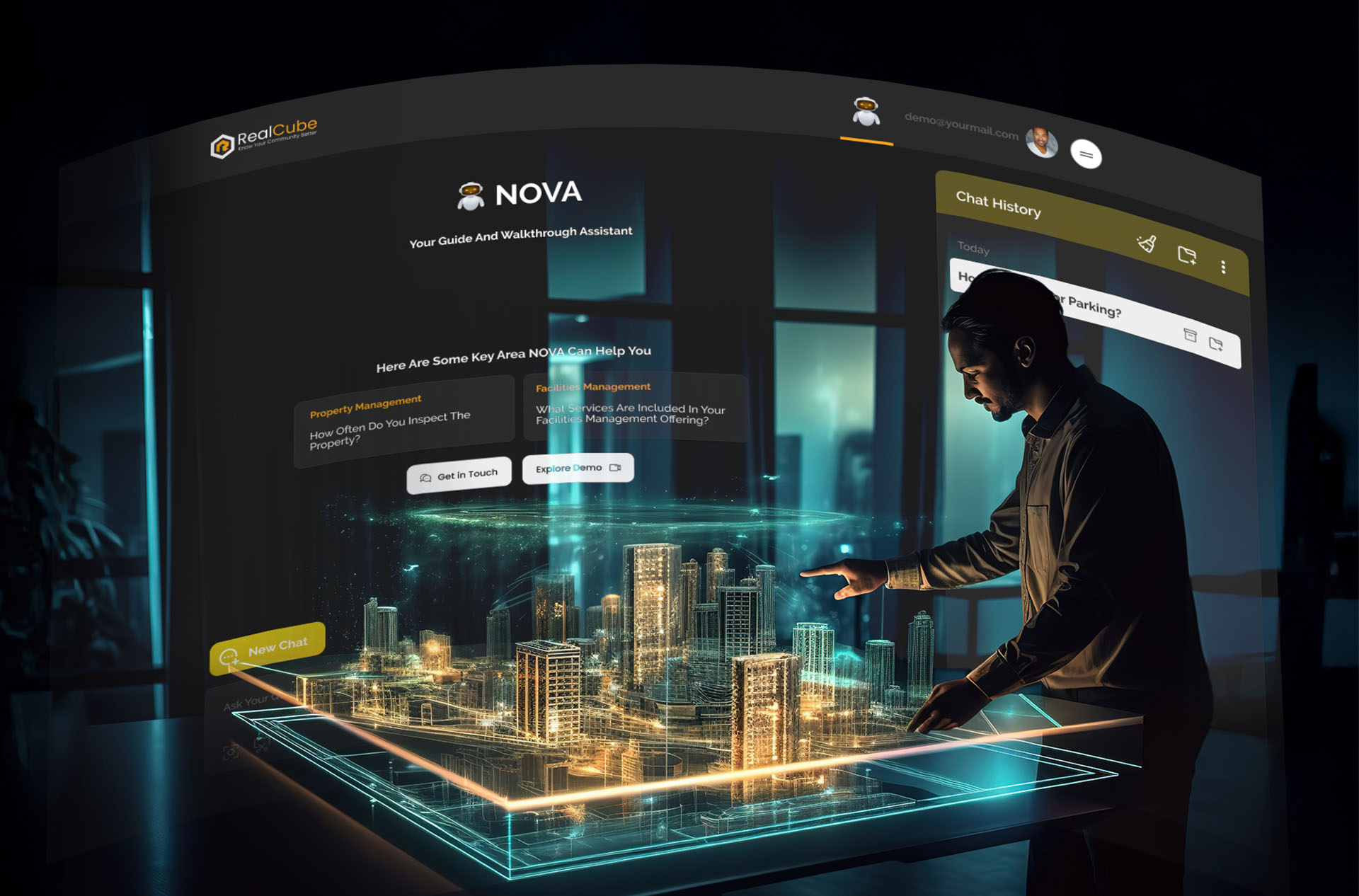
The real estate industry is no longer operating in a traditional environment driven only by phone calls, spreadsheets, and manual follow-ups. Modern buyers expect faster responses, personalized experiences, transparent communication, and seamless digital interactions. At the same time, real estate businesses are managing increasing competition, rising operational costs, and massive volumes of customer data.
To stay ahead, forward-thinking real estate teams are investing in AI-driven platforms that help automate operations, improve customer engagement, and make smarter business decisions.
Artificial intelligence is no longer a futuristic concept in real estate. It is rapidly becoming a core business strategy for companies that want to scale efficiently and deliver better customer experiences.
Platforms like RealCube are helping real estate businesses adopt intelligent automation and centralized management systems to improve productivity, optimize sales pipelines, and enhance operational performance.
The Shift Toward Intelligent Real Estate Operations
Traditional real estate processes often involve repetitive manual tasks such as:
- Managing leads manually
- Tracking property inquiries
- Sending follow-up emails
- Handling customer records
- Managing payment schedules
- Generating reports
- Coordinating between departments
As businesses grow, these manual operations become difficult to manage efficiently. Delays, missed opportunities, data errors, and poor communication can directly affect revenue and customer satisfaction.
AI-driven platforms help eliminate these inefficiencies by automating workflows and providing real-time business intelligence.
Why Real Estate Companies Are Embracing AI
1. Faster Lead Response and Better Conversion Rates
In real estate, response time can determine whether a lead converts into a customer. AI-powered CRM systems can automatically capture leads from websites, social media campaigns, and property portals while instantly assigning them to the right sales teams.
AI tools can also:
- Prioritize high-intent leads
- Trigger automated follow-ups
- Send personalized communication
- Track customer behavior
- Recommend next actions for sales teams
This significantly improves lead conversion rates while reducing manual workload.
2. Smarter Customer Insights
AI platforms analyze customer behavior, preferences, and engagement patterns to help real estate businesses understand what buyers are actually looking for.
This allows teams to:
- Recommend relevant properties
- Personalize customer communication
- Predict buying behavior
- Improve marketing campaigns
- Identify high-value opportunities
Data-driven personalization helps businesses build stronger customer relationships and increase trust.
3. Automation of Repetitive Tasks
One of the biggest reasons companies invest in AI-driven platforms is automation. Real estate teams spend a large amount of time on repetitive administrative tasks that reduce productivity.
AI automation can simplify:
- Appointment scheduling
- Document management
- Payment reminders
- Follow-up emails
- Sales reporting
- Inventory updates
- Customer onboarding
By automating these tasks, teams can focus more on sales, strategy, and customer engagement.
4. Real-Time Decision Making
AI-powered dashboards and analytics provide real-time visibility into business performance. Instead of relying on outdated reports or disconnected spreadsheets, management teams can instantly access accurate data from a centralized platform.
This helps organizations monitor:
- Sales performance
- Lead conversion metrics
- Project profitability
- Customer engagement
- Revenue growth
- Market trends
Real-time insights help businesses make faster and smarter decisions.
5. Enhanced Customer Experience
Modern customers expect digital convenience. AI-driven platforms improve customer experiences by providing quicker responses, automated support, transparent communication, and seamless interactions throughout the buyer journey.
Features such as AI chatbots, customer portals, automated updates, and intelligent support systems help businesses provide a more professional and responsive experience.
Satisfied customers are more likely to refer businesses to others, improving long-term brand reputation.
The Role of AI in Real Estate Finance Management
Financial management is another area where AI is creating a major impact. AI-driven platforms can automate invoice generation, payment tracking, commission calculations, and financial reporting with higher accuracy.
This reduces:
- Manual accounting errors
- Delayed payments
- Financial inconsistencies
- Administrative overhead
It also improves transparency and operational efficiency across finance teams.
AI and Predictive Analytics in Real Estate
Predictive analytics is becoming one of the most valuable applications of AI in real estate. AI systems can analyze historical and real-time data to forecast trends and identify opportunities before competitors do.
This may include:
- Property demand forecasting
- Customer purchase predictions
- Revenue forecasting
- Sales trend analysis
- Investment opportunity insights
Businesses that use predictive analytics gain a significant competitive advantage in the market.
Why Cloud-Based AI Platforms Are Becoming Essential
Cloud-based AI platforms offer flexibility and scalability that traditional systems cannot provide. Real estate teams can access data securely from anywhere while maintaining collaboration across departments and locations.
Cloud-based systems also offer:
- Better data security
- Lower infrastructure costs
- Automatic software updates
- Remote accessibility
- Scalable business operations
This makes them ideal for growing real estate companies looking to modernize operations.
The Future of Real Estate Technology
The future of real estate will be heavily driven by intelligent technologies. Companies that fail to adopt AI may struggle to compete in a rapidly digitalizing market.
Future AI innovations in real estate may include:
- AI-powered property recommendations
- Virtual property assistants
- Smart investment analysis
- Predictive customer engagement
- Automated compliance monitoring
- Advanced business forecasting
As technology evolves, AI-driven platforms will become a standard requirement rather than an optional upgrade.
Final Thoughts
The real estate industry is entering a new era where speed, automation, customer experience, and data-driven decision-making are critical for success. Forward-thinking real estate teams understand that relying on outdated systems can limit growth and reduce operational efficiency.
By investing in AI-driven platforms like RealCube, businesses can automate workflows, improve lead management, enhance customer experiences, and gain valuable business insights from a centralized platform.
AI is not replacing real estate professionals — it is empowering them to work smarter, respond faster, and scale more efficiently in an increasingly competitive market.