
The Real Cost of Construction Delays in the UAE
Every week a real estate project runs late carries a price - not just in contractor penalties and financing costs, but in buyer confidence, regulatory scrutiny, and brand reputation. In a market as competitive and fast-moving as the UAE, that price can be significant.
According to data compiled by Dubai Land Department and property intelligence platform DXB Interact, approximately 70% of Dubai residential units scheduled for completion in early 2026 were overdue. And while the UAE construction market is projected to grow from USD 66.89 billion in 2024 to USD 96.06 billion by 2030 - a CAGR of 6.06% - that pipeline of growth also means more projects competing for the same contractors, resources, and approvals at the same time.
The challenge is not ambition. It is the absence of real-time, connected planning across every phase of development. That is exactly the gap that digital project planning software is built to close.
| ~72% Dubai units scheduled for completion reported as overdue, Q1 2026* | 15% Schedule duration reduction with digital collaboration tools* | $96 Bn UAE Construction Market projected by 2030 (CAGR 6.06%)* |
A Fitch Ratings report noted that supply chain disruption and higher shipping costs could extend build timelines and raise developers' working-capital requirements - making proactive digital planning not just useful, but essential.
The UAE/Dubai Context: Why Delay Management Is a Strategic Priority
The UAE real estate market is unique. Developers are managing off-plan pipelines that rely on milestone-based escrow releases, DLD compliance, RERA regulations, and buyer trust - all simultaneously. A single missed handover date does not just frustrate a buyer; it can trigger regulatory notifications, damage escrow fund positions, and affect a developer's credibility in a market where reputation is currency.
Add to this the scale challenge: during 2024 and 2025, over 400 active construction projects were simultaneously underway across Dubai alone. This created genuine pressure on the available workforce, permit processing timelines, and material supply chains - with Red Sea shipping disruptions adding further strain to procurement schedules.
The developers navigating this environment most effectively share one common trait: they have replaced disconnected spreadsheets and email trails with integrated, digital construction planning systems that give them live visibility into every workstream.
The 5 Root Causes of Real Estate Project Delays
Before you can solve delays, you need to understand where they actually originate. Most are not caused by bad contractors or bad luck - they are caused by broken information flows and disconnected planning.
1. Fragmented Data Across Teams and Systems
When land teams, design consultants, procurement managers, and site engineers each work from different spreadsheets or isolated tools, version conflicts are inevitable. Someone builds from an outdated drawing. A material list does not reflect a late design change. A variation gets approved verbally but never formally recorded. Each of these moments introduces delay - quietly, and often invisibly until the problem is too large to avoid.
2. Reactive Rather Than Predictive Scheduling
Traditional construction scheduling tools capture what has happened - they do not tell you what is likely to happen next. By the time a critical path delay surfaces on a weekly report, it has already cascaded into subcontractor plans, material orders, and authority inspections. The industry needs tools that flag risk weeks in advance, not days after the fact.
3. Slow Approval and Variation Workflows
In large-scale developments, budget variation approvals, RFI responses, and design change requests often travel through manual email chains with no tracking, no escalation logic, and no audit trail. Weeks can pass between a site query and a formal resolution - during which construction either proceeds on assumption or stalls completely.
4. Poor Procurement Visibility
Material delays and subcontractor onboarding issues are among the most common causes of schedule slippage. Without a centralised procurement workflow that connects bid management, vendor qualification, purchase orders, and delivery tracking, project managers are constantly chasing updates rather than managing outcomes.
5. Governance Gaps at Phase Transitions
The handover from design to tendering, or from pre-construction to construction, is one of the highest-risk moments in any project. Without enforced stage-gate governance - checkpoints that require specific compliance and financial criteria to be met before a project advances - teams routinely proceed into execution phases with unresolved design gaps, unconfirmed budgets, or incomplete approvals.
How RealCube PMIS Solves Each of These Challenges
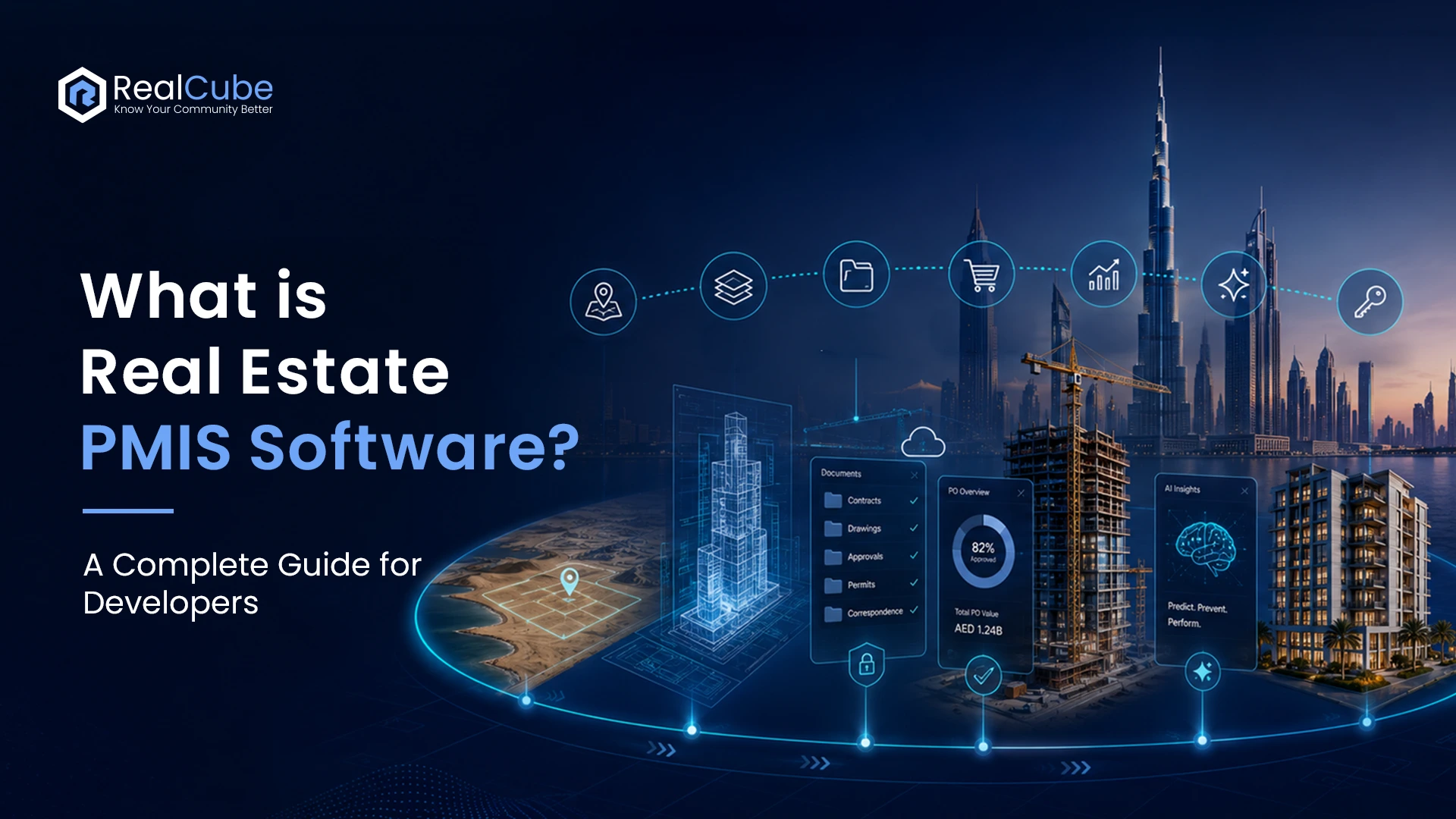
RealCube is purpose-built as an end-to-end Real Estate Project Management Software platform for the UAE and GCC markets. Unlike generic Western project management tools, it is designed to handle the specific regulatory, financial, and operational complexity that UAE developers deal with every day.
Here is how RealCube addresses the root causes of delay at each stage of the development lifecycle:
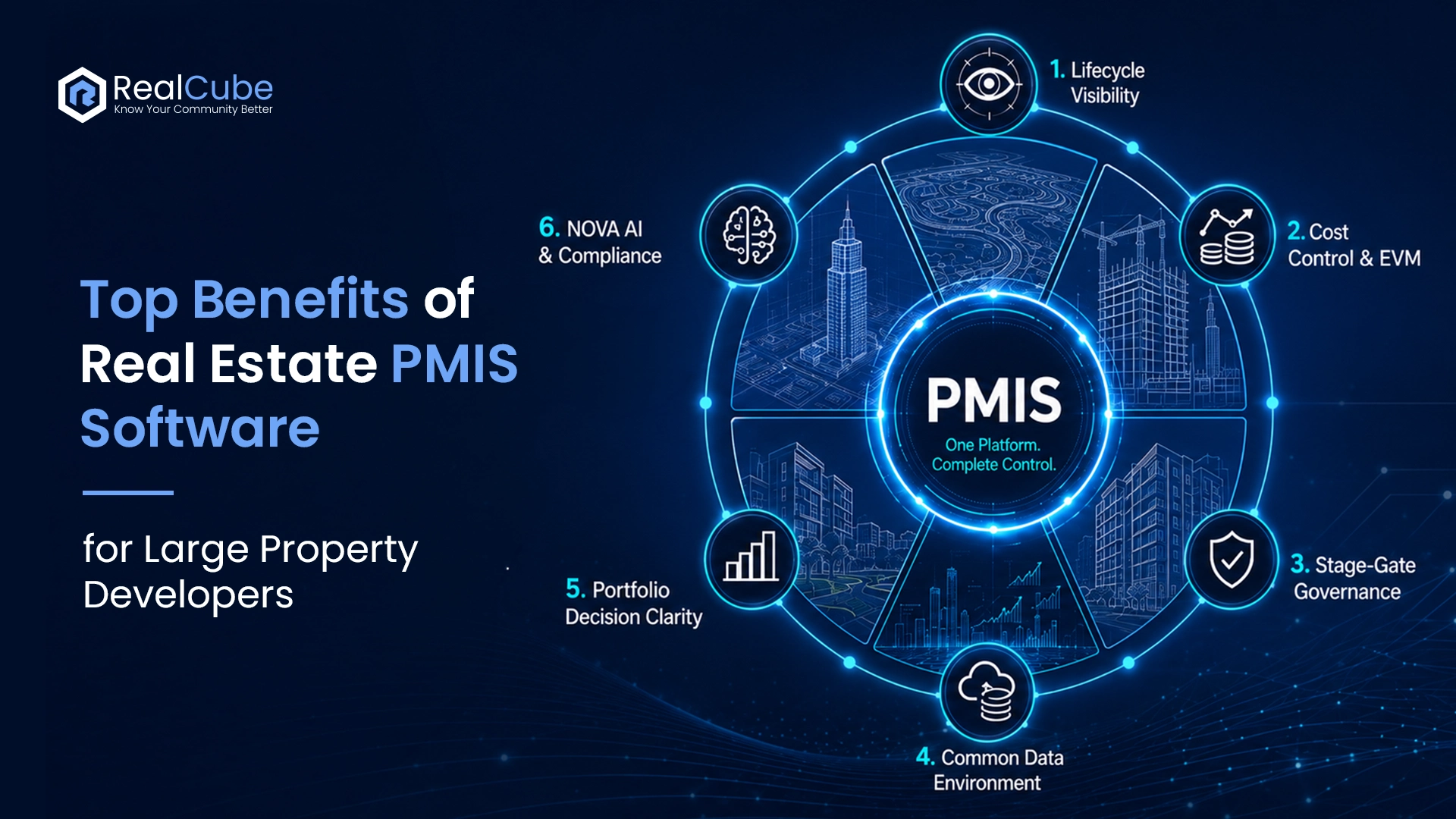
Unified Common Data Environment (CDE): Every drawing, BIM model, transmittal, and document lives in a single, version-controlled repository. Every stakeholder works from the same latest information - eliminating the version conflicts that quietly derail site execution.
Configurable Workflow Engine: Budget variations, RFIs, and approval requests are routed automatically through the right channels, with escalation rules, auto-closure triggers, and full audit trails. What used to take weeks in email chains can be resolved in hours.
Stage-Gate Governance: RealCube enforces phase transitions through built-in compliance checkpoints. A project cannot move from design to tendering without meeting specific financial and documentation criteria - removing one of the most dangerous sources of construction delay before it can develop.
Integrated Procurement Suite: From bid management and supplier qualification to purchase orders and delivery tracking, RealCube's Procurement Suite gives project managers complete visibility across the supply chain - reducing the material delays and vendor issues that consistently push handover dates.
NOVA AI Predictive Analytics: RealCube's AI engine analyses project data in real-time to surface schedule risks, flag cost anomalies, and predict delivery outcomes before they become site problems. This shifts the project team from reactive to proactive management.
Native Scheduling Integrations: RealCube connects with Primavera P6 and Microsoft Project, allowing project schedulers to import existing plans and visualise them within the platform's Gantt interface - without disrupting established workflows.
RealCube PMIS: Key Features at a Glance
| RealCube PMIS Capabilities & Solutions | What It Delivers |
| Real Estate Project Planning | Centralised scheduling from land acquisition to handover |
| Construction Scheduling & Schedule Integration | Native Gantt views with Primavera P6 & MS Project integration |
| Construction Project Controls | Automated alerts, variance tracking & stage-gate controls |
| Real Estate PMIS | End-to-end project governance across the full development lifecycle |
| Cost & Budget Control | EVM, budget tracking, contractor KPIs, and cost control dashboards |
| Digital Construction Management | 4D BIM-ready CDE with document versioning & transmittal management |
| Construction Workflow Automation | Configurable workflows, RFI management & 15 built-in site forms |
| NOVA AI Predictive Analytics | AI-driven schedule risk, anomaly detection & delivery forecasting |
The Business Outcomes: What You Actually Gain
Adopting a digital Real Estate Project Planning Software is not just an operational upgrade - it delivers measurable outcomes that directly affect your bottom line, your buyer relationships, and your regulatory standing.
| Outcome / KPI | How RealCube Delivers It |
| Fewer Missed Deadlines | Stage-gate controls and automated alerts keep every milestone visible and enforced |
| Reduced Rework Cost | Centralised document versioning eliminates version conflicts and outdated drawings on site |
| Stronger Stakeholder Trust | Real-time dashboards give investors, DLD, and leadership instant, accurate project status |
| Better Budget Control | EVM-based project controls surface cost variances before they become overruns |
| Faster Approval Cycles | Automated workflow engine routes approvals and triggers auto-closure on external gates |
| AI-Powered Risk Foresight | NOVA AI predicts potential delays weeks in advance - not days after the fact |
Best Practices for Digital Construction Planning
Implementing a Construction Project Planning Software platform delivers the best results when paired with a few key organisational practices:
- Start with a single source of truth: Migrate all project documentation into your CDE on day one. Parallel paper trails immediately undermine digital governance.
-
Define your stage-gate criteria before go-live: Know exactly what financial and compliance conditions must be met at each phase transition - and configure them into the platform before the first project begins.
-
Connect your scheduling tools: Import your Primavera P6 or MS Project schedules into RealCube to maintain your existing baseline plans while gaining real-time visibility across the portfolio.
-
Involve your procurement team early: Digital Construction Planning works best when procurement workflows are integrated with scheduling - so material delivery timelines are visible on the same dashboard as construction milestones.
-
Use AI insights as a management trigger, not just a report: When NOVA AI flags a schedule risk or cost anomaly, treat it as an action item - not background information. The value of predictive analytics lies in acting on predictions, not just reading them.
-
Track contractor performance consistently: Use built-in forms, WIRs, NCRs, and EVM dashboards to maintain an objective contractor performance record - which both protects your interests and incentivises performance.
Conclusion
Construction delays in UAE real estate are not going away on their own. With 70% of Dubai units overdue in early 2026 and the development pipeline continuing to grow, the developers who will lead this market are those who treat project planning as a strategic discipline - not just an administrative function.
Digital project planning through a platform like RealCube PMIS changes the equation. It replaces reactive problem-solving with proactive governance, replaces fragmented communication with a unified data environment, and replaces guesswork with AI-driven intelligence.
The result is not just fewer delays. It is better projects, stronger buyer relationships, cleaner financials, and a development business built to scale in one of the world's most dynamic property markets.
Frequently Asked Questions
Q1. What is Real Estate Project Planning Software and why does it matter?
Real Estate Project Planning Software is a digital platform that brings scheduling, budgeting, document management, and contractor coordination into one system. It matters because fragmented spreadsheets and siloed tools are a leading cause of construction delays and cost overruns in the UAE - particularly as the scale and complexity of developments continues to grow.
Q2. How does a Real Estate PMIS Software like RealCube prevent construction delays?
RealCube PMIS prevents delays through a combination of stage-gate governance (a project cannot advance phases without meeting compliance criteria), automated approval workflows, real-time EVM tracking, and NOVA AI predictive analytics - which flag schedule risks before they become site problems.
Q3. Can RealCube integrate with Primavera P6 or Microsoft Project for Construction Scheduling?
Yes. RealCube offers native integration with Primavera P6 and Microsoft Project, allowing project schedulers to import their existing schedules and visualise them as Gantt charts inside the platform - without losing work or rebuilding plans from scratch.
Q4. Is RealCube suitable for managing UAE-specific compliance requirements?
Absolutely. RealCube is built specifically for the GCC market, handling complex authority requirements including Title Deed management, Escrow law compliance, DLD reporting, and government land department API integrations - requirements that generic Western PMIS platforms often do not address.
Q5. How long does it take to implement Real Estate Development Software like RealCube?
Implementation timelines vary by project complexity and portfolio size, but RealCube's cloud-native architecture and pre-configured workflows significantly reduce setup time compared to legacy ERPs. The team provides structured onboarding, and most enterprise clients are operationally live on core modules within weeks - not months.
CTA
Ready to Eliminate Construction Delays?
Talk to our experts and discover how RealCube PMIS brings real-time control, predictive intelligence,
and end-to-end governance to your real estate development portfolio. Visit us at : www.realcube.estate
* Note (approx. Values) : Third-party statistics and market figures cited in this article are sourced from publicly available industry reports (ResearchAndMarkets, DXB Interact, Dubai Land Department, Deloitte / Autodesk, AGBI, Eleco/Thinkproject, CONEXPO), Edwards & Towers, Dubai Real Estate Market Q1 2026 analysis. All data should be independently verified before use in external publications, investor materials, or regulatory submissions.